
-
Call Now +86 19025276800
-
Any Questions Emily@sunwaymachinegroup.com
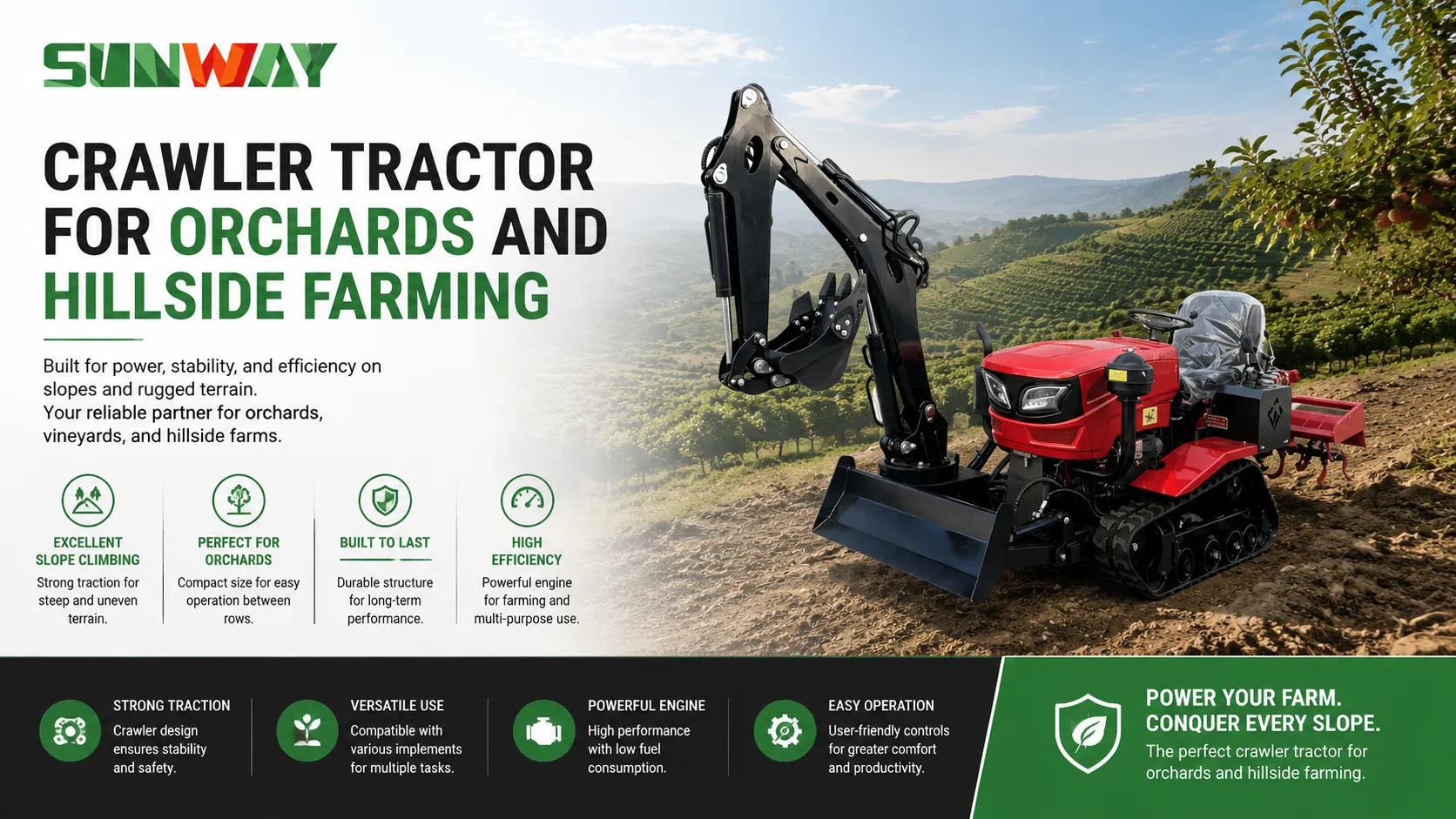
Crawler Tractor for Orchards and Hillside Farming

Orchards, vineyards, and hillside farms need machines that can move through narrow areas while maintaining traction on uneven land. A rubber track crawler tractor can distribute weight across a wider surface and provide stable movement where wheeled equipment may slip. Compare the compact crawler tractor and multi-functional tracked tractor for different work requirements.
Why Tracks Help on Agricultural Terrain
- Improved grip on slopes, soft soil, and uneven farm tracks.
- Lower ground pressure can reduce soil compaction.
- Stable movement around orchard rows and hillside plots.
- Better access during wet or loose-ground conditions.
Orchard and Vineyard Buying Checklist
- Measure row width and headland turning space.
- Confirm machine width, track size, and attachment dimensions.
- List tasks such as tilling, transport, mowing, trenching, or grading.
- Describe maximum slope and seasonal soil conditions.
- Plan maintenance access and local spare-parts inventory.
Target Buyers and Regions
The strongest buyers are orchard owners, vineyards, hillside vegetable farms, landscaping contractors, forestry operators, and regional equipment dealers. Relevant markets include Mediterranean agriculture, Australia, New Zealand, North America, and hilly agricultural regions in Southeast Asia.
Choosing Between the Current Models
The SUNWAY SWCT-35 Crawler Tractor fits compact farm and orchard applications. The Multi-Functional Tracked Crawler Tractor is positioned for buyers who need broader agriculture, forestry, or construction-support capability.
FAQ
Do crawler tractors damage orchard soil?
Any machine can affect soil, but wider rubber tracks typically spread machine weight and can reduce ground pressure compared with narrower tires.
Can a crawler tractor work on hills?
Crawler tractors are commonly selected for improved traction and stability on slopes, but the machine configuration must match the actual gradient and operating conditions.
