PRIVACY POLICY / TERMS & CONDITIONS

-
Call Now +86 19025276800
-
Any Questions Emily@sunwaymachinegroup.com
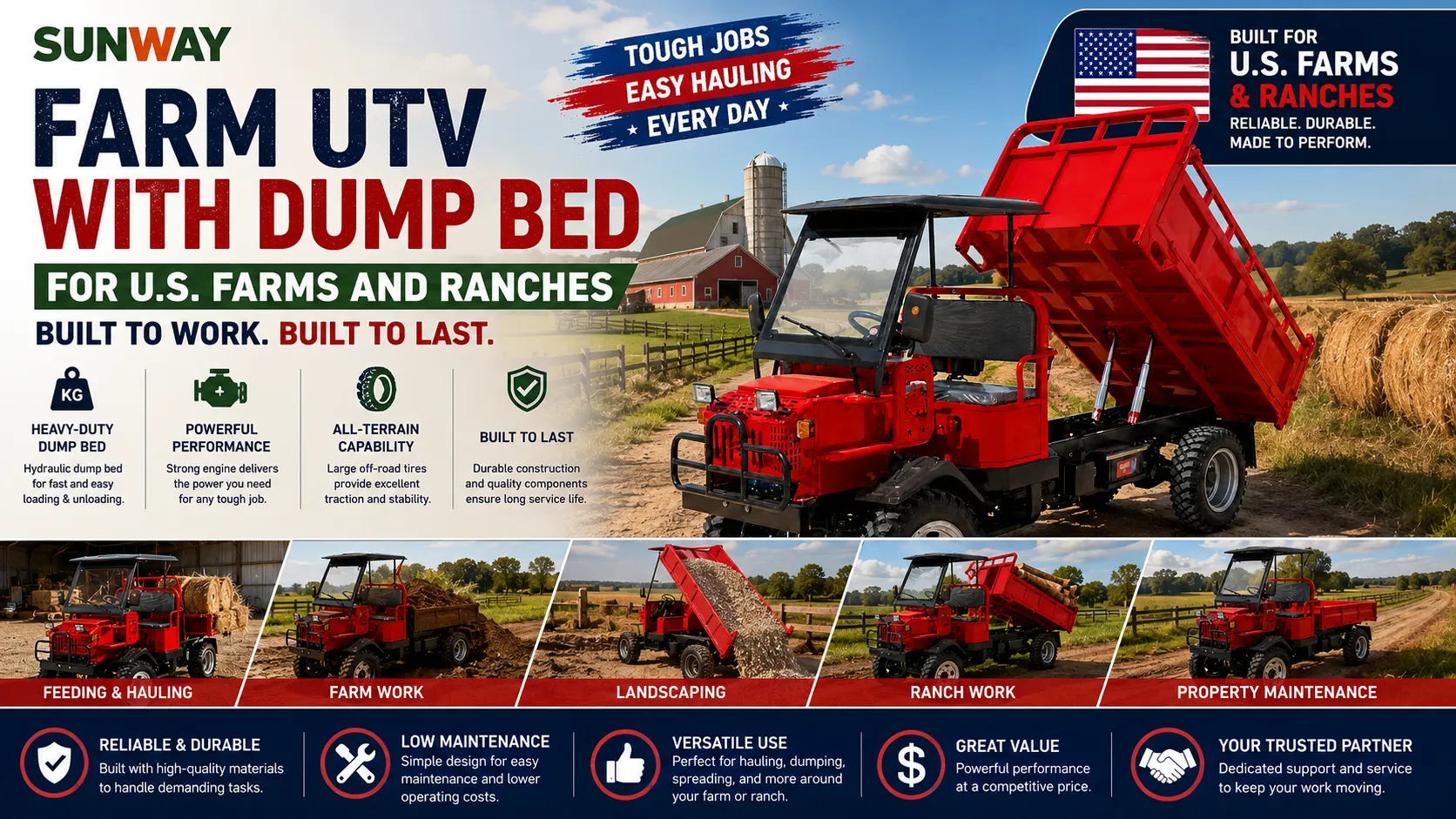
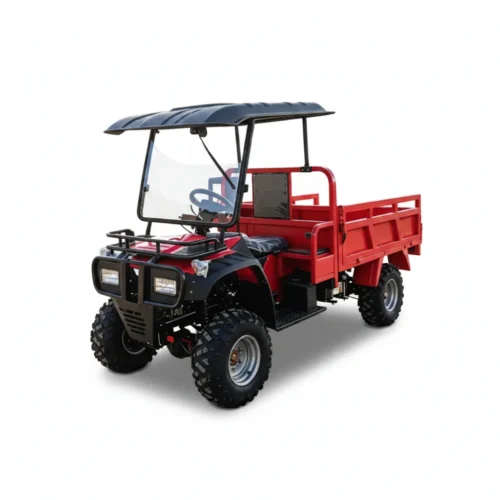
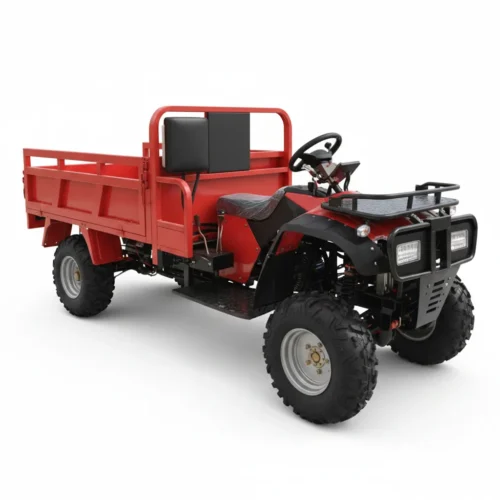
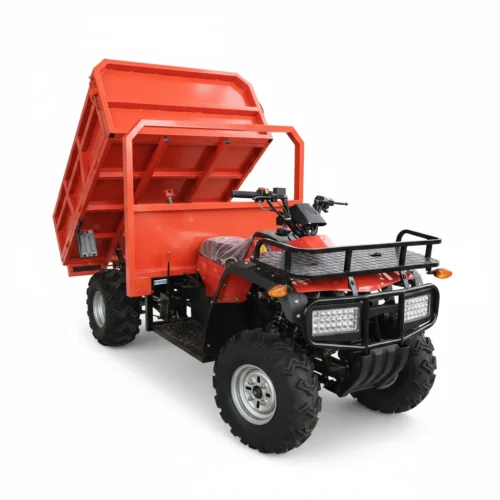
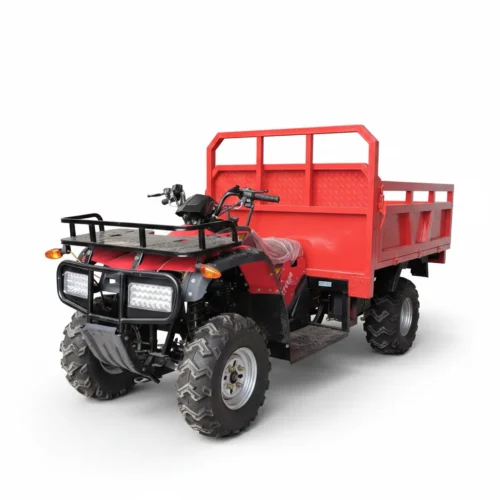
Farm UTV with Dump Bed for U.S. Farms and Ranches
Compare 4WD farm UTV cargo-bed sizes for U.S. farms, ranches, orchards, and rural properties, with practical questions for import buyers.

A farm UTV with a dump bed can carry tools, feed, fencing supplies, produce, and maintenance materials across farms, ranches, orchards, and large rural properties. The most useful configuration is the one that fits daily routes and cargo without becoming unnecessarily large or difficult to manoeuvre.
Sunway’s farm UTV and utility vehicle range includes 2WD and 4WD options with cargo-bed lengths around 1600, 1800, and 2000 mm. U.S. buyers should compare traction, bed size, controls, service support, and intended operating environment before choosing a model.
Start with the daily job list
List the tasks the vehicle will perform most often. Carrying mineral tubs on open ranch tracks is different from moving crates between orchard rows. Property maintenance may require frequent stops, tools, and small loads, while feed or harvest work may favour a longer cargo bed.
Record the typical load, maximum realistic load, route length, surface, slope, turning space, and number of trips per day. This information helps the supplier recommend a configuration instead of quoting a vehicle based only on a general product name.
Choosing 1800 or 2000 mm cargo length
The 1800 mm 4WD gasoline manual UTV can be considered where buyers want a balance of cargo space and manoeuvrability. The 2000 mm 4WD gasoline manual UTV offers a longer bed for users whose common loads benefit from additional length.
Do not select bed length in isolation. Confirm the full vehicle dimensions, turning requirements, body width, tipping arrangement, payload guidance, tyre options, and how the longer configuration affects access to barns, lanes, orchards, or loading areas.
2WD or 4WD
Two-wheel drive may be adequate for firm, level routes and lighter duties. Four-wheel drive is often considered for loose surfaces, mud, grades, and changing weather. The decision should still account for tyres, load, operator technique, braking, and the actual terrain.
Buyers should ask how drive selection works and what maintenance is required. For multi-unit purchases, consistent controls and parts across the fleet can simplify training and service.
Import-buyer checklist
- Confirm the exact vehicle and cargo-bed dimensions.
- Describe route surfaces, slopes, gates, and turning areas.
- Ask for current engine, transmission, drive, brake, and tyre options.
- Confirm dump-bed operation and tailgate configuration.
- Request manuals, parts lists, packing details, and export documents.
- Ask which routine and wear parts should ship with the first order.
- Verify applicable U.S. federal, state, and local requirements for the intended use.
Common mistakes
One mistake is buying the longest cargo bed without checking turning space and route width. Another is assuming that 4WD makes every slope or soft surface safe. Vehicle limits, cargo distribution, speed, and operator training still matter.
Do not assume an off-road utility vehicle can be registered or driven on public roads. Rules vary, and the buyer should verify the exact product configuration and intended use with the relevant authorities.
Frequently asked questions
Which cargo-bed length is best for a farm UTV?
Choose from representative loads. Measure common tools, bins, feed, and supplies, then compare the complete vehicle dimensions and route constraints.
Is 4WD necessary for ranch work?
It may be valuable on loose, muddy, or uneven ground, but suitability depends on the complete vehicle, tyres, load, grade, and operating conditions.
What should a dealer include in an enquiry?
Include target customers, expected annual volume, preferred specifications, destination, compliance questions, spare-parts expectations, and whether samples or mixed configurations are required.
Configure a farm UTV
Explore the Sunway farm UTV range and use the request a quote form to share cargo dimensions, terrain, preferred drive system, order quantity, and destination. Sunway can then prepare a model-specific quotation for your U.S. farm, ranch, or distribution business.
