PRIVACY POLICY / TERMS & CONDITIONS

-
Call Now +86 19025276800
-
Any Questions Emily@sunwaymachinegroup.com
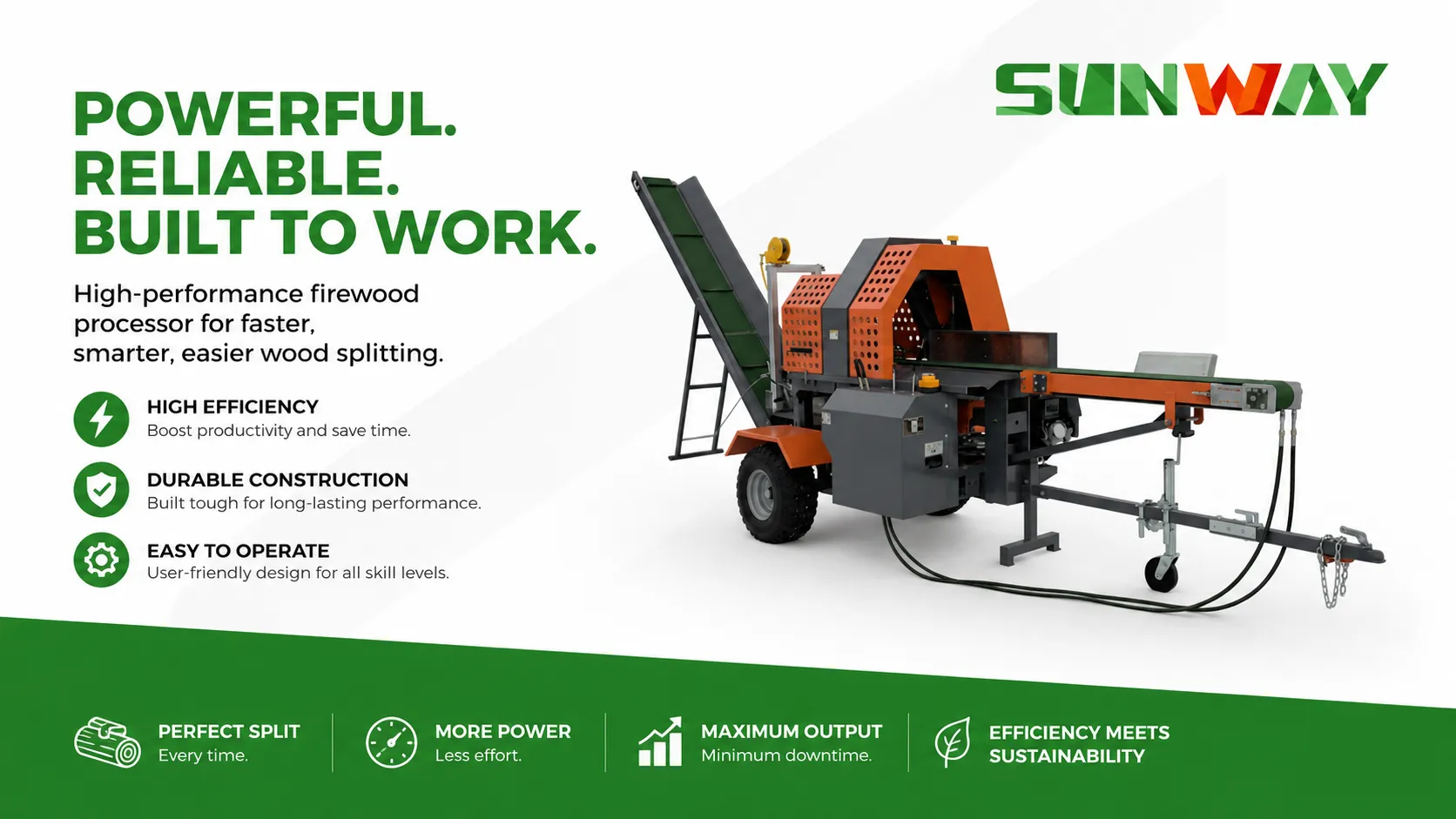
How to Choose the Perfect Log Splitter: The Ultimate Buyer’s Guide

Whether you are preparing a few cords of firewood for a cozy winter at home or managing a high-volume commercial timber operation, choosing the right log splitter is a critical decision. Pick a model that is too weak, and you’ll find yourself jammed on knotted hardwood; pick one that is over-engineered, and you’ve wasted thousands of dollars on power you don’t need.
To help you make the right investment, we have broken down the essential factors to consider when choosing a log splitter.
1. Tonnage: How Much Force Do You Actually Need?
A log splitter’s power is measured in tonnage—the amount of hydraulic pressure the ram applies to the wood. The tonnage you need depends entirely on two factors: log diameter and wood hardness.
- Green Wood vs. Seasoned Wood: Hardwoods (like Oak, Hickory, and Elm) or “green” (unseasoned) logs require significantly more tonnage than seasoned softwoods (like Pine or Cedar).
Here is a quick reference guide to matching log diameter with the required tonnage:
| Log Diameter | Softwood (Seasoned) | Hardwood (Green/Knotted) |
| Up to 6 inches | 5 Tons | 7 Tons |
| 6 to 12 inches | 7–10 Tons | 15–20 Tons |
| 12 to 18 inches | 15–20 Tons | 25–27 Tons |
| 20+ inches | 22+ Tons | 30–35+ Tons |
2. Power Source: Gas vs. Electric vs. Manual
Where and how you plan to work will dictate the power source of your machine.
Electric Log Splitters (Best for Residential/Light Duty)
If you only need to split wood in your backyard or garage, electric is often the best choice.
- Pros: Quiet, zero emissions, zero engine maintenance, lightweight, and can be used indoors.
- Cons: Limited portability (requires an extension cord/outlet) and usually caps out at around 10–12 tons of force.
Gas Log Splitters (Best for Heavy-Duty/Remote Work)
For serious wood splitting, gas-powered hydraulic units are the industry standard.
- Pros: Highly portable, high tonnage (ranging from 20 to over 40 tons), and incredibly fast cycle times.
- Cons: Loud, produces exhaust, requires gas/oil maintenance, and cannot be used in enclosed spaces.
Kinetic & Manual Splitters (Best for Speed or Off-Grid Safety)
- Kinetic Splitters: Use flywheels instead of hydraulics. They are incredibly fast (splitting logs in under 3 seconds) but struggle with large, knotted hardwoods.
- Manual/Foot-Powered: Great for small kindling or off-grid properties where oil and electricity are unavailable.
3. Orientation: Horizontal vs. Vertical
How heavy are the logs you are lifting? This determines the orientation you need.
- Horizontal Only: The log must be lifted up onto the cradle. This is perfectly fine for small to medium logs, but lifting a 100-pound oak log onto a beam will quickly strain your back.
- Horizontal/Vertical Combinations: These machines allow you to pull a pin and tilt the entire splitting beam upright. You can then roll massive, heavy logs directly onto the base plate at ground level without lifting them. If you handle logs over 12 inches in diameter, a vertical option is highly recommended.
4. Key Specs That Impact Efficiency
When comparing brands, don’t just look at the price tag. Check these three critical specifications:
- Cycle Time: This is the time it takes for the ram to extend, split the log, and fully retract. A 10-second cycle time feels vastly faster and more productive than a 19-second cycle time over the course of a long afternoon.
- Engine/Motor Reliability: For gas models, look for reputable, widely serviceable engines (such as Briggs & Stratton, Kohler, or Honda). This ensures easy access to replacement parts.
- Wedge Design: Standard single wedges are great for large logs, but if you want to speed up your workflow, look for trailers that support a 4-way wedge, which splits a log into four neat pieces in a single stroke.
Final Thoughts: Finding Your Match
Before making your final purchase, always consider regional availability and aftermarket support. Buying a highly-rated brand that has local service centers in your area ensures that if a hydraulic seal blows or a valve leaks, you won’t be stuck waiting weeks for parts in the middle of winter.
Assess your average log size, determine your power boundaries, and choose a machine that leaves you a little bit of “headroom” in tonnage so you never find yourself stuck on a stubborn knot.
